Capability Isn't the Same as Capacity: Understanding the Difference in Dementia
Oct 21, 2026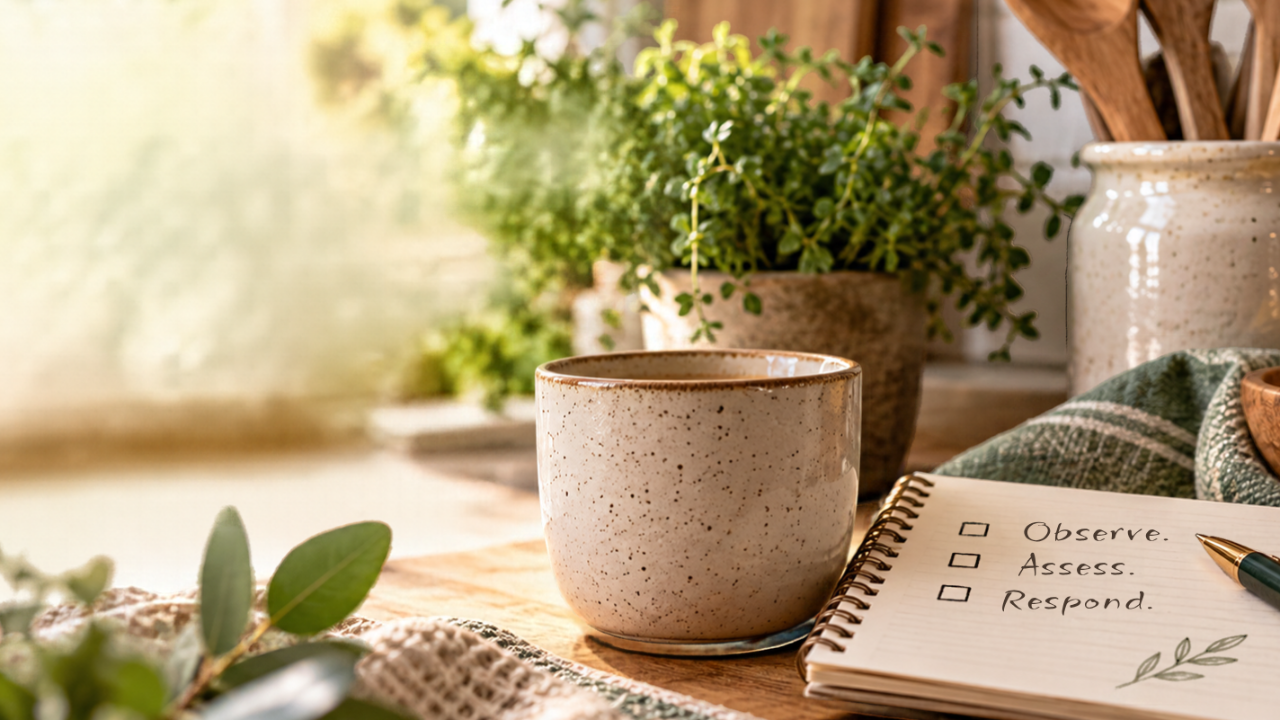
Capability Isn't the Same as Capacity: Understanding the Difference in Dementia
One of the most challenging aspects of supporting someone living with dementia is recognizing that what a person has always been able to do may no longer reflect what they can comfortably or successfully manage today.
Someone may have prepared meals for decades, managed household finances, driven familiar roads, or organized an entire family's schedule. Those abilities have been part of their identity, their independence, and their everyday life.
When dementia begins to affect those familiar activities, it can be difficult to understand what has changed.
An important place to begin is recognizing the difference between capability and capacity.
What Is the Difference?
Capability refers to the skills, knowledge, and abilities a person has developed over time.
Capacity, as we're using the term here, refers to the person's ability to draw upon those skills and manage a particular activity under their current circumstances.
For example, someone may know how to prepare a favorite meal. They recognize the ingredients, understand the recipe, and have prepared it hundreds of times.
But dementia may affect their ability to organize the steps, manage several things at once, recognize when something needs attention, or adjust when something unexpected happens.
The knowledge and familiarity may still be there, even when completing the entire task has become more difficult.
This distinction matters because it changes the question we ask.
Rather than assuming, “They can't do that anymore,” we can begin asking, “Which parts can they still do, and where might they need support?”
Dementia Doesn't Affect Every Ability Equally
Dementia is progressive, but changes do not occur uniformly across every skill or activity.
A person may struggle to manage medications but continue to enjoy gardening. They may have difficulty following a complicated conversation but remain deeply engaged when listening to music.
Even within a single activity, some steps may remain familiar while others become challenging.
Their abilities may also vary depending on fatigue, illness, stress, unfamiliar surroundings, distractions, or the time of day.
This is why observing the individual matters more than making assumptions based solely on a diagnosis.
Are You a Helicopter Care Partner?
You've probably heard the term helicopter parent. But have you ever considered that we can become helicopter care partners, too?
A helicopter care partner is someone who, often with the very best intentions, hovers a little too closely, steps in a little too quickly, and unintentionally takes over things the person living with dementia may still be able to do.
Sometimes we're worried about safety. Sometimes we want to prevent frustration. And sometimes, quite simply, we're impatient.
It can be difficult to watch someone take several minutes to accomplish something we could finish in seconds.
But there's an important question worth asking:
Are we helping because the person needs assistance, or because it's easier and faster for us to do it ourselves?
When we automatically take over, we may unintentionally diminish opportunities for independence, participation, confidence, and a sense of accomplishment.
That doesn't mean we should stand back and allow someone to struggle unnecessarily. Nor does it mean ignoring genuine safety concerns.
It means recognizing the difference between supporting someone and doing everything for them.
Perhaps the person needs a little more time. Perhaps a task can be broken into smaller steps. Maybe a simple prompt, a quieter environment, or having supplies arranged in advance is enough.
And sometimes, the most meaningful thing we can offer is patience.
The goal isn't to do less for the sake of doing less. It's to preserve what the person can still do for as long as it remains meaningful and appropriate.
Observe. Assess. Respond.
At The Quiet Path, we use a simple framework to guide thoughtful dementia care:
Observe. What is actually happening? Where is the person succeeding, and where are they experiencing difficulty?
Assess. What might be contributing to the difficulty? Is the task too complicated? Is the environment distracting? Is the person tired, overwhelmed, uncomfortable, or needing a different kind of support?
Respond. How can we adapt our approach to support the person's well-being, preserve their dignity, and encourage participation wherever possible?
This approach invites us to respond deliberately rather than react automatically.
It also helps us recognize that the solution isn't always doing more for someone. Sometimes it's changing how we support them.
Seeing the Person Beyond the Task
A person's worth has never been defined by how efficiently they complete a task.
Dementia may change how someone manages everyday activities, but it does not erase their preferences, relationships, life experiences, or need to be included.
When we distinguish between what someone has known how to do and what they can manage today, we become better equipped to offer support that is both practical and respectful.
We can adapt expectations without diminishing the person.
We can recognize changing needs without overlooking remaining abilities.
And we can provide help without losing sight of the individual receiving it.
Compassion starts with understanding. Understanding changes how we care.
The Quiet Path provides dementia education and guidance for individuals, families, care partners, professionals, and communities. Our focus is helping people better understand dementia and respond to the changing needs of the person living with dementia with knowledge, compassion, and respect.
Lorem ipsum dolor sit amet, consectetur adipiscing elit. Cras sed sapien quam. Sed dapibus est id enim facilisis, at posuere turpis adipiscing. Quisque sit amet dui dui.
Stay connected with news and updates!
Join our mailing list to receive the latest news and updates from our team.
Don't worry, your information will not be shared.
We hate SPAM. We will never sell your information, for any reason.
